Home
HomeWhat's The Difference Between PWM and MPPT Solar Charge Controller?
 Dec 13,2025

 Vevsun
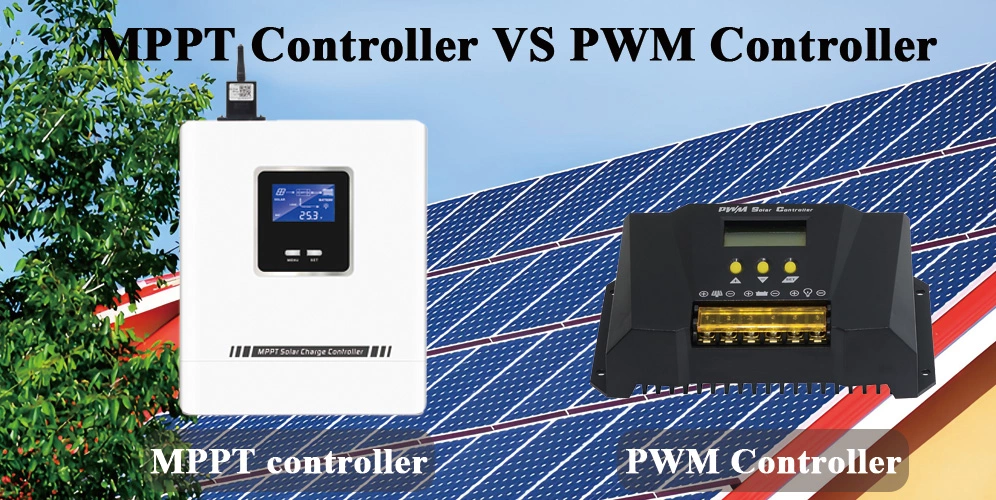
An In-Depth Analysis of MPPT and PWM Charge Controllers
Introduction: The Central Nervous System of Solar Power
While solar panels often steal the spotlight as the primary energy harvesters, the true intelligence and regulatory power of any off-grid or battery-based solar system lie within a critical, yet frequently underestimated component: the solar charge controller. This device acts as the diligent guardian of your battery bank, meticulously regulating the flow of electrical energy from the photovoltaic (PV) panels to the batteries. Its primary mission is twofold: to ensure batteries are charged efficiently and to prevent the catastrophic effects of overcharging and deep discharging, thereby dramatically extending battery life.
Within the realm of solar charge controllers, two dominant technologies have emerged as the standard-bearers: Maximum Power Point Tracking (MPPT) and Pulse Width Modulation (PWM). The choice between these two technologies is not merely a matter of specification comparison; it is a fundamental decision that influences the system's cost, efficiency, scalability, and ultimate return on investment. This comprehensive guide will dissect the operational principles, advantages, limitations, and ideal applications of both MPPT and PWM controllers. Our objective is to equip you with the nuanced understanding required to make an informed, context-specific choice, ensuring your solar installation is not just functional, but optimally tailored to your unique energy needs and constraints.
Chapter 1: Demystifying the MPPT Solar Charge Controller
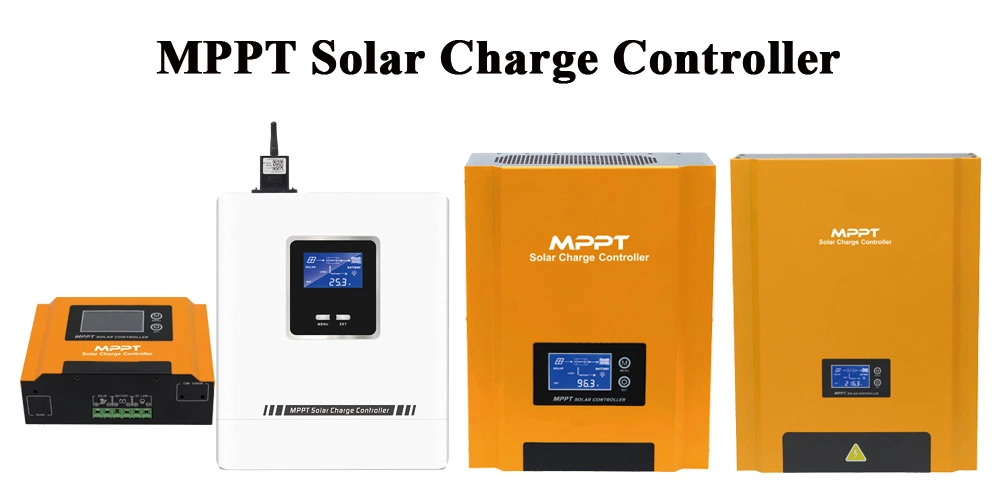
1.1 The Fundamental Principle: The Intelligent Power Optimizer
At its core, an MPPT controller is an advanced DC-DC converter imbued with sophisticated digital intelligence. The term "Maximum Power Point Tracking" refers to its unique ability to continuously seek and operate at the precise voltage and current combination (the "Maximum Power Point" or MPP) where the solar panel array yields its highest possible power output.
To grasp this concept, it is essential to understand that a solar panel's power output is not a fixed value. It is a dynamic variable dictated by the relationship between its voltage (V) and current (A), expressed by the fundamental equation: Power (P) = Voltage (V) x Current (A). This relationship is graphically represented by the panel's Current-Voltage (I-V) curve and Power-Voltage (P-V) curve. Environmental conditions, primarily solar irradiance and temperature, cause this curve to shift and change shape throughout the day. For instance, on a cold, bright day, a panel's voltage is higher, while on a hot, cloudy day, both voltage and current can drop significantly.
A simple analogy is that of a manual transmission car. The engine (solar panel) has a specific RPM range (voltage) where it delivers peak horsepower (power). An MPPT controller is like an expert driver who constantly and imperceptibly adjusts the gear ratio (the DC conversion) to keep the engine in this optimal RPM band, regardless of whether the car is going uphill, downhill, or on a flat straightaway. It ensures that not a single watt of available power is left unharvested.
1.2 The Mechanism of Action: A Continuous Dialogue
The MPPT controller engages in a perpetual, high-frequency "dialogue" with the solar array. It performs a series of intricate operations:
Sampling: It continuously monitors the array's voltage and current.
Calculation: It instantaneously calculates the power output (P = V x A).
Perturbation: It minutely adjusts the operating voltage of the array up or down.
Observation: It observes the resulting change in power output.
Decision & Lock: If the power increases, it continues perturbing in that direction. If the power decreases, it reverses course. This process, often using algorithms like "Perturb and Observe" or "Incremental Conductance," allows it to lock onto the MPP hundreds of times per second.
The controller's true genius lies in its subsequent action. Once it identifies the optimal voltage for the panels (e.g., 18 Volts for a 36-cell panel), it then converts this higher voltage down to the lower voltage required by the battery bank (e.g., 12V or 24V), while simultaneously increasing the output current. Crucially, in an ideal lossless conversion, power is conserved. Therefore, if the input power is 180W (18V x 10A), the output power delivered to a 12V battery will be approximately 180W, but now at 15A (180W / 12V = 15A). This "current boost" is the mechanism through which MPPT controllers recover energy that would otherwise be lost with a PWM controller.
1.3 Advantages of MPPT Controllers
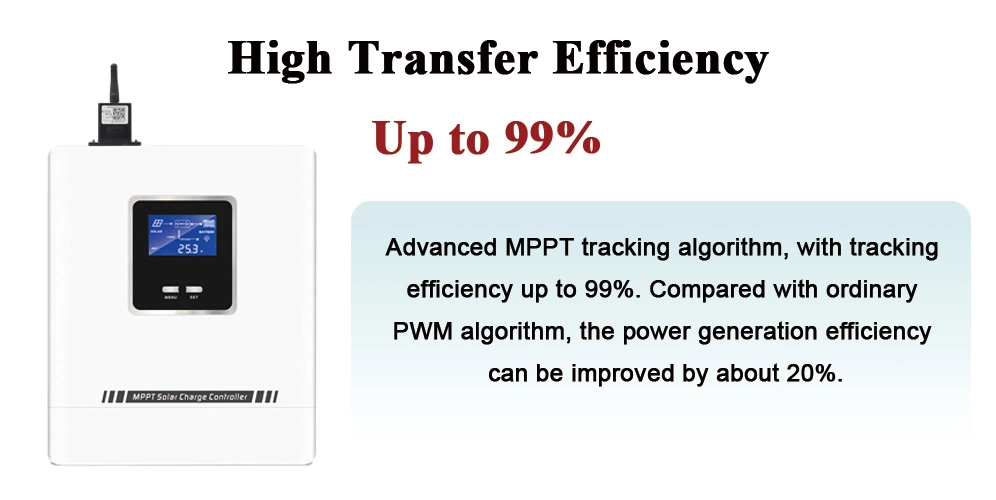
Exceptional Energy Harvesting Efficiency: This is the paramount advantage. MPPT controllers typically operate at conversion efficiencies of 94% to 99%. This translates to a potential increase in harvested energy of 15% to 30% compared to PWM, with the gains being most pronounced in cold climates and during periods of low or indirect sunlight (cloudy days, early mornings, late afternoons).
Superior Flexibility in System Design: MPPT controllers allow for the series-connection of solar panels to create a high-voltage, low-current input string. This capability is transformative for installations with long wire runs between the panels and the controller, as higher voltage minimizes resistive power losses and can allow for the use of thinner, less expensive cabling.
Optimal Performance in Fluctuating Conditions: Their dynamic tracking makes them exceptionally resilient to partial shading, dirt accumulation on panels, and temperature-induced performance drops. They can extract the absolute maximum from whatever conditions are present.
Enhanced Compatibility and Scalability: They are inherently compatible with a wider range of panel technologies and configurations, including higher-voltage grid-tie panels that are often available at a discount. This makes them the only choice for large-scale, high-power systems and provides ample headroom for future system expansion.
1.4 Disadvantages of MPPT Controllers
Substantially Higher Initial Cost: The complex circuitry, advanced microprocessors, and robust components required for MPPT technology result in a unit cost that is typically two to three times higher than an equivalently rated PWM controller.
Increased System Complexity: With greater sophistication comes a higher number of potential failure points. While generally very reliable, when they do fail, diagnosis and repair are more complex and often require component replacement rather than simple fixes.
Slight Standby Power Consumption: The internal electronics require a small amount of power to operate, leading to a minimal but non-zero parasitic load on the battery when the sun is down.
Chapter 2: Understanding the PWM Solar Charge Controller
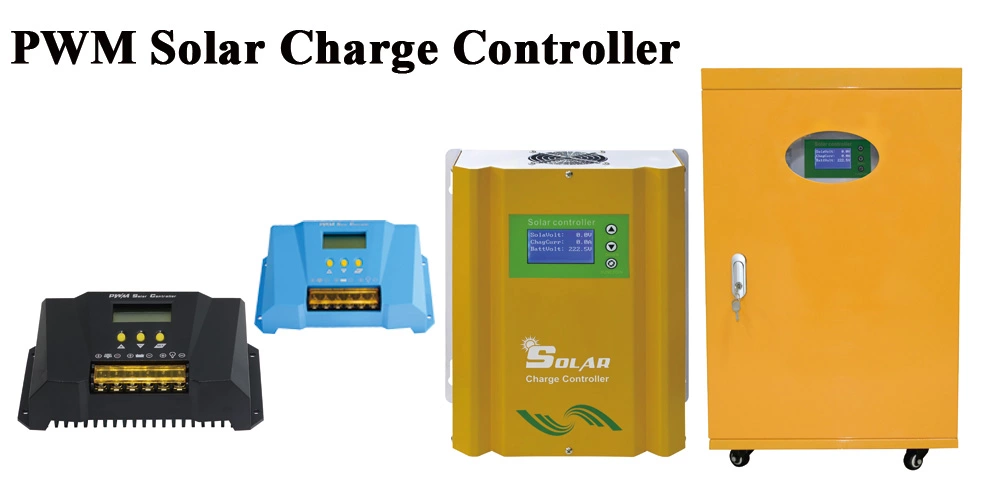
2.1 The Fundamental Principle: The Steady-State Regulator
PWM controller operates on a much simpler, yet effective, principle. Think of it not as a sophisticated power optimizer, but as a rapid-fire switch that connects and disconnects the solar panel directly to the battery. The core function of a PWM controller is to regulate the charging state by rapidly pulsing the connection on and off. The key parameter is the "duty cycle"—the ratio of the "on" time to the total cycle time.
In this "on" state, the solar panel's voltage is effectively "pulled down" to match the instantaneous voltage of the battery. A 12V panel nominally operating at 18V will be forced to output at the battery's voltage, which might be 13.2V during bulk charging. It does not perform any DC voltage conversion. As the battery approaches full charge, the PWM controller intelligently reduces the width of the "on" pulses, effectively reducing the average current flowing into the battery and allowing it to transition smoothly from absorption to a gentle float charge, thus preventing overcharging and gassing.
A fitting analogy for a PWM controller is a gardener using a fast-acting valve on a hose to fill a bucket. The water pressure (panel voltage) is constant. To control the flow, the gardener doesn't change the pressure; instead, they rapidly open and close the valve. To fill the bucket quickly, they keep the valve open most of the time (a high duty cycle). As the bucket nears full, they open the valve for very short bursts (a low duty cycle) to top it off without splashing. It's a direct and simple method of control.
2.2 Advantages of PWM Controllers
Exceptional Cost-Effectiveness: The most compelling advantage of PWM technology is its affordability. The simpler design, lack of complex components, and mature manufacturing process make PWM controllers the undisputed budget-friendly champion.
Robustness and Reliability: With fewer active components and a less complex operational paradigm, PWM controllers are inherently robust and have a lower statistical probability of failure. Their simplicity translates to proven long-term reliability in the field.
Simplified Operation and Maintenance: They are typically "set-and-forget" devices with straightforward LED indicators and minimal user configuration. Troubleshooting is generally simpler due to the less complicated internal architecture.
Minimal Standby Power Draw: When not actively charging, their power consumption from the battery is often negligible, making them suitable for very small systems where every watt-hour counts.
2.3 Disadvantages of PWM Controllers
Inherently Lower Energy Harvesting Efficiency: This is the primary trade-off. Because a PWM controller clamps the panel voltage to the battery voltage, any excess voltage available from the panel is effectively wasted as heat. For a panel with a Vmp of 18V charging a 12V battery, a significant portion of the panel's potential power is never utilized.
Stringent Voltage Matching Requirement: For optimal (though still less efficient) performance, the nominal voltage of the solar panel array must closely match the voltage of the battery bank. You cannot, for example, efficiently use a high-voltage grid-tie panel with a 12V battery system using a PWM controller.
Limited Suitability for Larger Systems: The combination of lower efficiency and the voltage-matching constraint makes PWM controllers impractical for systems where maximizing energy harvest from limited roof space or in suboptimal conditions is a priority. They are fundamentally designed for smaller-scale applications.
Chapter 3: A Head-to-Head Comparative Analysis
To crystallize the differences, the following table provides a direct comparison across several critical performance and design parameters.
| Feature | MPPT Controller | PWM Controller |
| Core Operating Principle | DC-DC conversion with active power point tracking. | Rapid on/off switching (pulsing) to regulate voltage. |
| Typical Efficiency | 94% - 99% | 70% - 85% (relative to panel potential) |
| Energy Harvest | High. Up to 30% more energy harvested annually. | Moderate. Significant potential energy left unharvested. |
| Initial Cost | High | Low |
| System Voltage Matching | Flexible. Panel Vmp can be significantly higher than battery voltage. | Rigid. Panel nominal voltage must match battery voltage. |
| Ideal System Size | Medium to Large (150W and above) | Small (10W to 150W) |
| Performance in Cold Weather | Excellent. Higher panel Vmp is converted into extra current. | Poor. No utilization of the increased panel Vmp. |
| Performance in High Heat | Good, but relative advantage diminishes as panel Vmp drops. | Fair. Performance is less affected relative to its baseline. |
| Complexity & Reliability | Higher complexity, very high reliability. | Simpler design, excellent long-term reliability. |
| Cable Run Suitability | Excellent for long distances (can use high voltage). | Poor for long distances (requires thick, costly cables). |
Chapter 4: The Definitive Guide to Choosing What's Better for You
The question "Which is better?" is a fallacy. The correct question is, "Which is better for my specific situation?" The choice is not about superior technology in a vacuum, but about the optimal application of technology within a given context defined by budget, scale, and environment.
4.1 Scenarios Demanding an MPPT Controller: Invest for Performance
You should strongly prioritize an MPPT controller if your project aligns with the following profiles:
The High-Efficiency Maximizer: Your primary goal is to extract the maximum possible energy from every square inch of your solar array. This is critical when roof or installation space is limited, and you need to generate the most power within that constrained area.
The Owner of a Medium-to-Large Scale System: If your system is 200 watts or larger, or if it powers essential loads in a home, cabin, or workshop, the energy gains from an MPPT will quickly justify its higher upfront cost through improved performance and reliability.
The Cold-Climate Solar User: If you operate in a region with cold winters or consistently cool temperatures, the MPPT's ability to capitalize on the elevated voltage of cold panels will yield substantial energy bonuses, often when you need it most.
The Designer of a System with Long Wire Runs: For installations where the panels are located a significant distance (e.g., over 20 feet) from the battery bank, the MPPT's ability to handle high input voltages allows for series-wiring panels, reducing current, minimizing power loss, and saving money on copper wiring.
The Future-Proof Planner: If you anticipate expanding your system, upgrading your battery bank, or experimenting with different panel types, the flexibility and scalability of an MPPT controller provide invaluable peace of mind and adaptability.
4.2 Scenarios Where a PWM Controller is the Pragmatic Choice
A PWM controller is not a "lesser" choice but a smarter one in these specific contexts:
The Budget-Conscious Project Builder: When the initial investment is the paramount concern, and the project is financially constrained, a PWM controller delivers reliable battery charging and protection at the most accessible price point.
The Small-Scale Application Specialist: For small, simple systems such as those powering a DIY garden light, a small RV fan/light setup, a trickle-charger for a boat, or a single-purpose scientific sensor, the efficiency gains of an MPPT are negligible and do not justify the extra cost. A 50W system, for example, is firmly in PWM territory.
The Warm Climate Resident with Consistent Sun: In consistently hot, sunny environments where panel voltages are naturally lower, the performance gap between MPPT and PWM narrows. If your energy needs are modest and consistently met, a PWM is a perfectly adequate and cost-effective solution.
The Advocate of Simplicity and Proven Reliability: For users who prioritize operational simplicity, ease of troubleshooting, and a long track record of robust performance with minimal fuss, the straightforward nature of PWM technology is a significant benefit.
Conclusion: Aligning Technology with Intent
The evolution of solar charge controllers from simple PWM switches to intelligent MPPT optimizers represents a significant technological leap, offering unprecedented gains in energy efficiency. The MPPT controller stands as the undisputed performance leader, a sophisticated tool for maximizing return on investment in demanding and scalable applications.
However, technological superiority does not always equate to practical necessity. The humble PWM controller remains a remarkably effective, reliable, and economically sensible solution for a well-defined segment of the market. Its enduring relevance is a testament to the principle that the "best" technology is the one that most appropriately and economically solves the problem at hand.
In the final analysis, your decision should be a calculated one. Objectively assess your budget, quantify your energy requirements, consider your environmental conditions, and honestly evaluate your plans for future expansion. By doing so, you will move beyond the oversimplified "MPPT vs. PWM" debate and arrive at the only conclusion that truly matters: the perfect controller for your solar journey. Let your specific needs, not just specifications, be your guide.
 LiFePO4 vs. Lead-Acid Solar Batteries: A Comprehensive 2026 Guide
 You May Also Like

 Tel
Tel
 Email
Email
 Address
Room 340, 3rd Floor, No.69, Boai Middle Road, Shishan Town, Nanhai District, Foshan City, Guangdong, China.

Wendy
 Whatsapp